


How to Relieve Pelvic Pain During Pregnancy

Why does pelvic pain happen during pregnancy?
If you've ever experienced pregnancy, or spoken to someone who has, you’ve probably heard about pelvic pain.
It’s incredibly common, especially throughout pregnancy and the postnatal period, and for many women, it’s something they weren’t quite expecting.
But what is pelvic pain in pregnancy exactly, and why does it happen?
Often, people refer to this discomfort as Sciatica—that radiating pain from the lower back or buttock, travelling down the back of one leg. While sciatica can absolutely occur during pregnancy, what many people don’t realise is that not all pelvic pain stems from the sciatic nerve. This type of pain isn’t limited to pregnancy; in fact, many people, both men and women, may experience it due to injury or as part of low back pain.
Let’s take a closer look at what’s actually going on.
Sciatica vs. Pelvic Pain: What’s the difference?
Sciatica comes from the sciatic nerve, which runs from the base of the spine, through the gluteal (bottom) muscles, and runs back down the back of the leg to the knee. True sciatica involves compression or irritation of this nerve, resulting in that characteristic shooting or burning pain down the leg.
However, during pregnancy, many women experience pain that mimics sciatica but is actually caused by somatic referred pain. This means the discomfort is coming from other structures, like the joints or muscles of the pelvis and lower back, but the pain radiates in a similar way.
Why does pelvic pain happen more in pregnancy?

As your body prepares for birth, there are many hormones that change, either increase or decrease in concentration in the body. Some of these hormones, including Oestrogen are responsible for softening the joints and connective tissues, which can lead to increased mobility.
The body does this to prepare the joints of the pelvis to open and stretch beyond their usual limits to allow passage of the baby through the birth canal. The increased mobility in these pelvic joints, some that usually don't move at all outside pregnancy and birth, requires added support from the surrounding muscles to stabilize them.
Now imagine adding a growing baby to that scenario! Your body is managing added weight, shifting posture, and increased joint mobility all at once.
The added stress on the joints of the lower back, hip, and pelvis often causes hip, back, and leg pain particularly in weight-bearing positions, and with movements such as walking up/down stairs or on uneven surfaces.

Will the pelvic pain go away after birth?
For many women, pelvic pain eases significantly once the baby is born, mainly because the physical load decreases.
But hormones don’t return to their pre-pregnancy levels immediately. It can take several months for your body to re-stabilise, and during this time, some women continue to feel discomfort.
What might feel like “getting back to normal” on the outside might still be a period of transition on the inside.
Is pelvic pain just a normal part of pregnancy?
It’s certainly common, but that doesn’t mean you have to accept it as your new normal.
Pain that interferes with your ability to move, exercise, sleep, or care for your family shouldn’t be brushed off. In fact, many studies have shown that guided movement during pregnancy and after birth is important for a woman’s physical and mental health.
When pain limits this, it can often have a negative effect on her overall well-being or the ability to support her family in the way she needs to.
What to do when you have pelvic pain during pregnancy?
Start by noticing what tends to trigger or relieve your pelvic pain, and how much it affects your daily life. For instance, if climbing stairs tends to make the pain worse, choosing the lift could be a helpful alternative.
Reflect on your usual routine. Are you spending more time sitting, standing, or moving throughout the day? Are you doing any type of exercise? Understanding your triggers can help you modify your activities to reduce strain on your body.
Aim to find a balance in your movement to avoid worsening the pain. Remember, pushing through discomfort isn’t always the best strategy. It’s okay to take a step back and listen to your body.
Most importantly—get assessed. Seeing your Women's Health Physiotherapist or Health Care Practitioner is the best way to identify the underlying cause of your discomfort and guide you with movement, support, and practical strategies that suit your specific needs.
How can Women’s Health Hub support you?
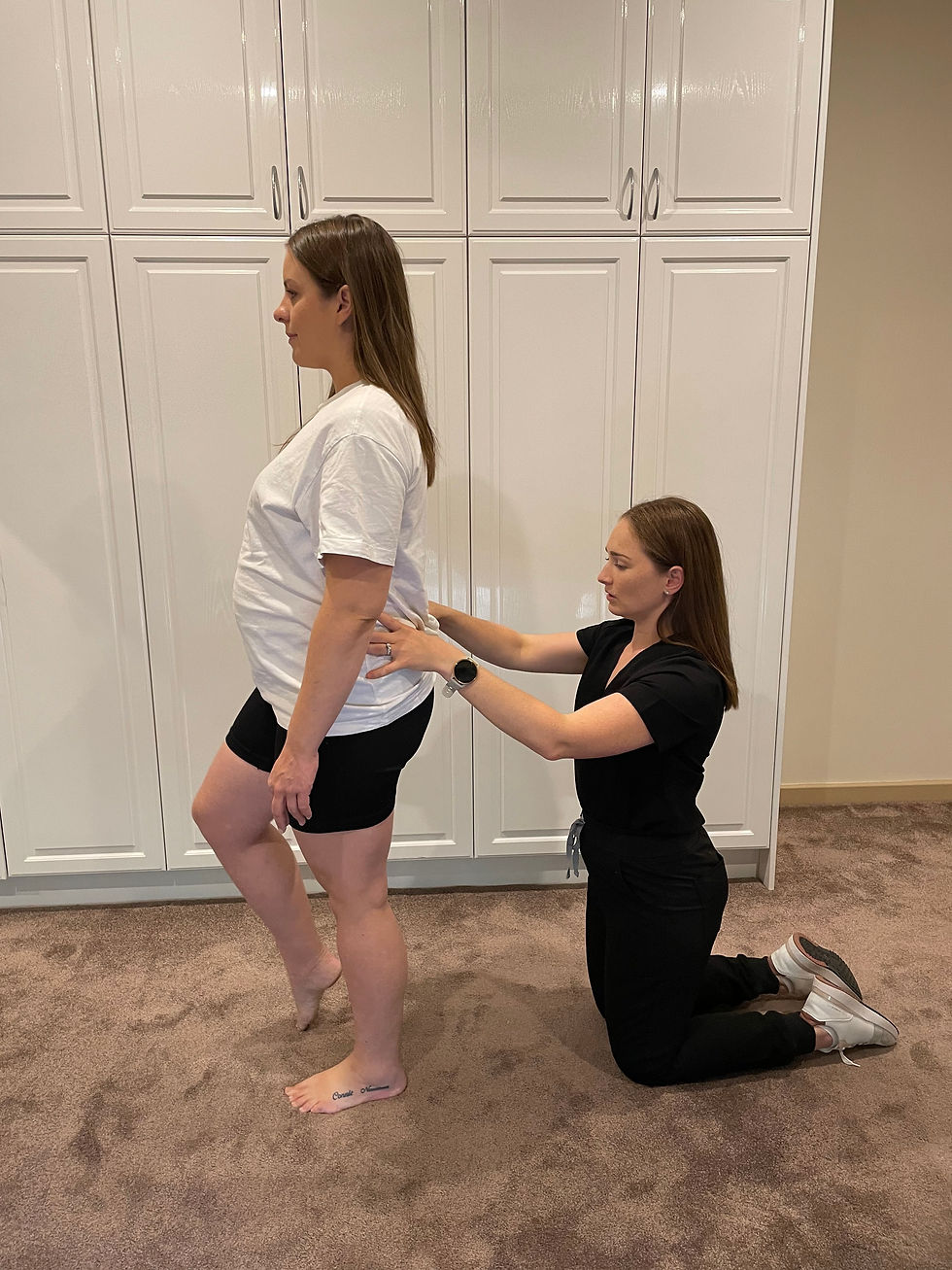
Pregnancy and motherhood come with enough challenges, pain doesn’t need to be one of them.
Pelvic pain is manageable, and you don’t have to wait until after birth to start feeling better.
Everybody is different. It's important to remember that if something worked for your friend or family member, it may not necessarily work for you. What worked for someone else may not work for you, and that’s okay.
If you’re dealing with pelvic pain and want personalised, evidenced-based care, we’re here to support you.
Book a consultation with our Women’s Health Physiotherapist at Women's Health Hub and let’s work together toward a more comfortable pregnancy.


Comments